-2.png?width=400&name=Untitled%20design%20(4)-2.png)
-1.png?width=400&name=Untitled%20design%20(1)-1.png)

Hear Mira AI in action
Listen to the blog
That gap, between what should happen and what you can see has happened, is where planned maintenance quietly turns into the unplanned kind. A service slips by a fortnight. Nobody notices, because the record lives on a different spreadsheet to the schedule, and the schedule lives in a different head to the person on site. The asset keeps running, until it doesn't. The breakdown that follows wasn't bad luck. It was a missed service that nobody could see was missed.
Unplanned downtime is one of the most expensive things an operation can carry. Across the world's largest companies it runs to hundreds of billions a year, around a tenth of revenue for some. But the cost rarely arrives as one dramatic failure. It arrives as a pattern: small slips, no visibility, repeated across sites until they compound into something with a price tag.
The intelligence to prevent most of it is already there. The service intervals are known. The asset history exists somewhere. The problem is the same one that runs through every operation: the information is fragmented, delayed, and disconnected from the decision. You can't act on a maintenance plan you can't see.
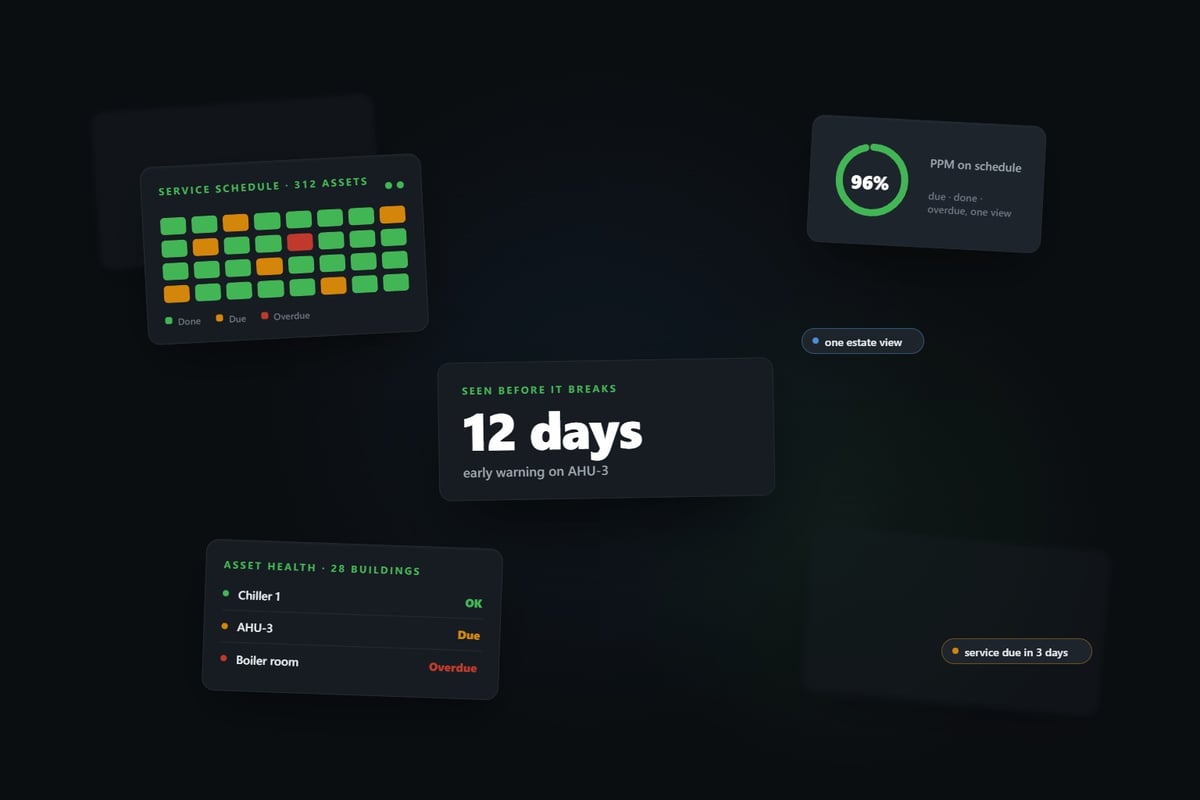
ocapii brings it into one place. Planned preventative maintenance is scheduled by asset, building and frequency, sitting alongside a live asset register with full service history. Work that's due, done and overdue shows in a single view, so you're managing the schedule rather than reconstructing it. Defects raised from anywhere, by photo and location, drop straight into the same view, which means planned and unplanned work stop living in separate worlds. The engineer's find on Tuesday and the service due on Friday are part of the same picture.
That's the move from recording maintenance to seeing it. Before, you logged what got done and hoped the gaps weren't important. After, you see what's due before it's late, you see what's overdue the moment it is, and you see the history of every asset when you need to make a call on repair or replace.
There's a commercial edge to this that operations leaders feel quickly. Visibility across assets isn't just about avoiding breakdowns. It's about extending asset life, planning spend instead of reacting to it, and knowing, with evidence, that the estate is being maintained to the standard you signed up for.
It also changes the conversation with finance. A reactive maintenance budget is a series of surprises: the failure nobody saw coming, the emergency call-out at the worst rate, the replacement brought forward by years because the asset was run into the ground. A visible PPM routine turns those surprises into a plan. You can see what's due and budget for it, see what's been deferred and understand the risk you're carrying, and show, asset by asset, that spend is going where the evidence says it should. The same record that prevents the breakdown also makes the case for the next budget.
You can't improve what you can't see. Maintenance is the proof of that. The teams that master it aren't the ones with more engineers. They're the ones who can see the whole picture and act on it before a missed service becomes a closed site.
See how ocapii handles planned maintenance on the Facilities & PPM use-case page and the Asset Tracking use-case page, or book a walkthrough to map it against your own assets.
See how planned maintenance can be just one of the components of your ocapii platform