


Hear Mira AI in action
Listen to the below blog
Everything that happens between those moments is invisible. The fridge that drifts overnight and recovers before the morning check. The freezer that fails on a Saturday when the check sheet says Monday. The cold room that's been running two degrees warm for a fortnight, too small a change to trigger an alarm but, depending on the food, the time and your control limits, enough to put stock at risk. The readings look fine. The risk is living in the gaps between them.
This is the heart of the food safety problem, and it's a visibility problem before it's a compliance one. Teams aren't failing to check. They're checking diligently and still operating partly blind, because a check is a snapshot and a fridge runs for 168 hours a week. You can take three readings a day and still miss the thing that mattered.
Key takeaways
- A manual temperature check is a snapshot, while a fridge runs for 168 hours a week.
- Overnight drifts, weekend failures and slow warming can all happen between readings that look fine.
- Food safety is a visibility problem before it is a compliance one, because teams are checking but still operating partly blind.
- Continuous monitoring with alerts to the right person gives earlier warning of a drift or failure, rather than waiting for the next check.
- Probe logging, HACCP routines and corrective actions in one place build a timestamped evidence trail as the work is done.
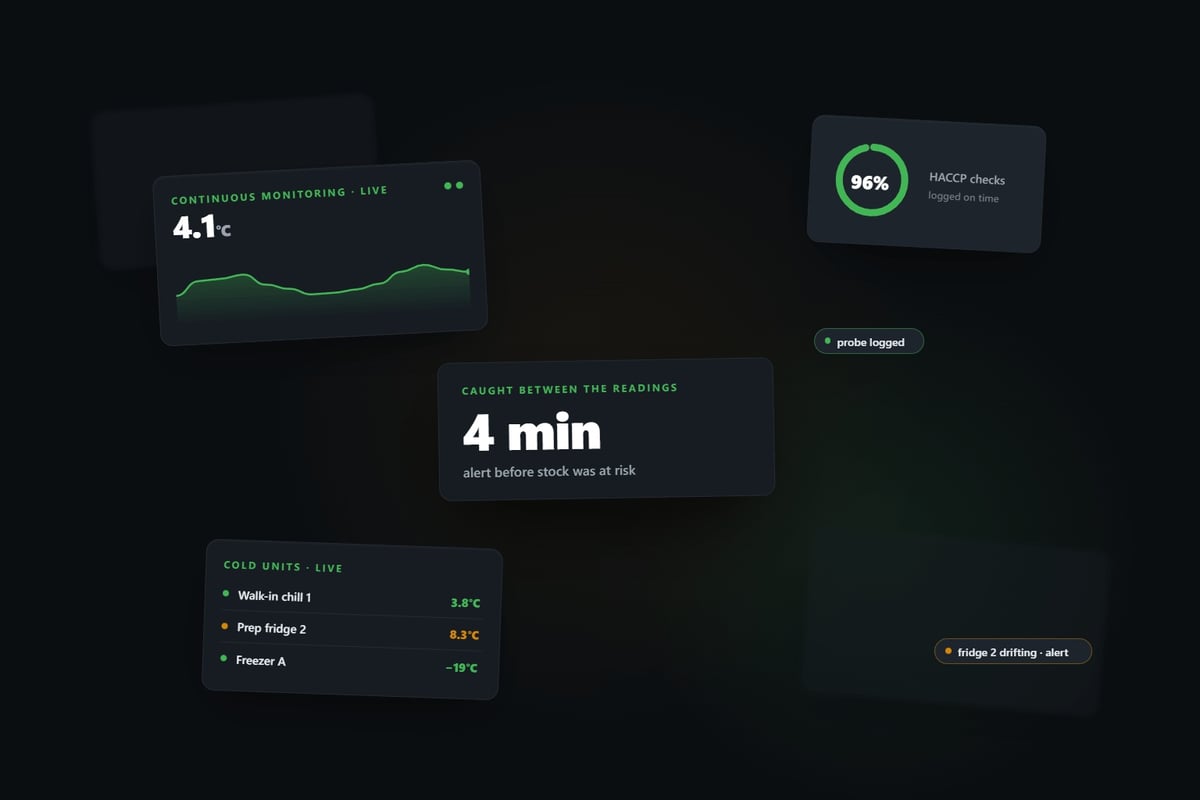
ocapii closes the gap between the readings. Temperature excursions can occur between manual readings, so continuous monitoring watches fridges, freezers and cold rooms around the clock and flags a drift or a failure as it develops, rather than when someone next opens the door. Out-of-range conditions raise an alert to the right person, so the team can act early rather than finding out after stock is lost. Monitoring gives earlier warning when sensors are configured and maintained correctly; teams still assess affected food and act under their HACCP procedures. Bluetooth probe logging captures cooking, cooling and goods-in temperatures straight to the platform, timestamped and searchable, so the manual checks that do still matter leave a clean record instead of a smudged sheet. HACCP routines, opening and closing checks and hot-hold logs sit in the same place, and a failed check becomes a corrective action with an owner and a deadline.
The difference is the difference between recording the temperature and knowing the temperature. Before, you had a sheet that proved someone looked three times. After, you have a continuous picture, an alert when it matters, and an evidence trail that builds as the work is done. The gaps where risk used to hide become much smaller.
There's a cost to those gaps that rarely shows up as a line item, because it shows up as waste, as spoiled stock quietly thrown away, and occasionally as something far worse than waste. WRAP estimates that food waste costs UK hospitality and food service around £3.2bn a year. Some of that waste can be stock that was safe until an unnoticed fridge fault made it unsafe, or stock thrown out on suspicion because no one could show it had stayed cold. Continuous monitoring helps with both: it flags the fault earlier, and it gives you a record of the conditions to support decisions about the stock, alongside the chilling and freezing limits your food-safety procedures set.
The alert is the part that changes behaviour most. A check tells you about the past. An alert tells you about now, while you can still do something. A fridge drifting at two in the morning is a problem you can often fix before the breakfast service if the alert reaches the right person at two and they can respond. It's a write-off if the first anyone hears of it is the morning check sheet. That single shift, from looking back at readings to being told the moment one moves, is what turns temperature monitoring from a record you keep into a risk you manage.
Food safety, done well, isn't a folder of readings produced for an inspector. It's the quiet confidence that you have a continuous view of your cold chain and can act soon after it moves. That's mastery of the thing, rather than a record of it.
FAQs
Are manual fridge temperature checks enough?
Manual checks are useful, but they only show the temperature at the moment someone looked. You can take three readings a day and still miss an overnight drift or a freezer that fails over the weekend.
What is continuous temperature monitoring?
Continuous temperature monitoring watches fridges, freezers and cold rooms around the clock, so a drift or failure is flagged earlier than the next manual check. Out-of-range conditions raise an alert to the right person so they can act early. It works best when sensors are configured and maintained correctly, and teams still assess any affected food under their HACCP procedures.
How can temperature monitoring help reduce food waste?
It flags fridge faults earlier, giving the team a chance to act before stock is lost. It also gives you a record of the conditions, so decisions about stock can be based on evidence rather than suspicion.
How do you keep HACCP temperature records digitally?
Use probes that log cooking, cooling and goods-in temperatures straight to a platform, timestamped and searchable. In ocapii, HACCP routines, opening and closing checks and hot-hold logs sit in the same place, and a failed check becomes a corrective action with an owner and a deadline.
See how food safety can be just one of the components of your ocapii platform